Building a Tourism Venture in Ecuador: What American Entrepreneurs Need to Know Before They Invest
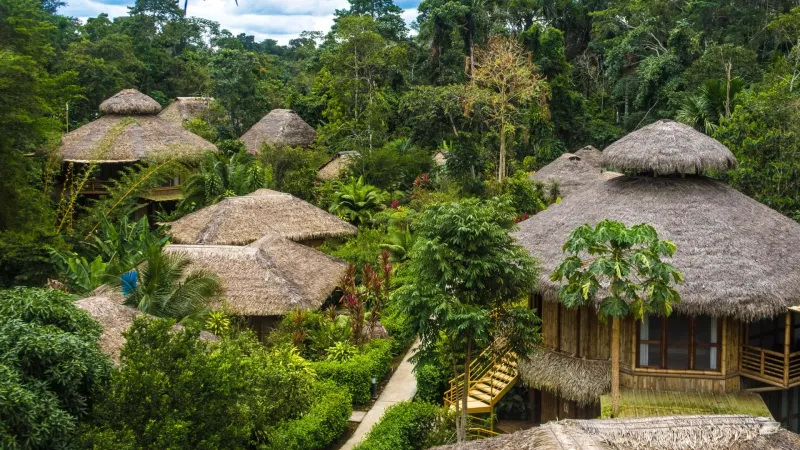
Photo: American entrepreneur eco-lodge Ecuador jungle tourism business, via expeditionec.com
For American entrepreneurs who've spent years dreaming of owning a travel-related business—only to be stopped cold by the cost of commercial real estate, licensing fees, and competitive saturation back home—Ecuador presents a genuinely compelling alternative. The country's tourism infrastructure is growing steadily, international visitor numbers have climbed consistently over the past decade, and the cost of doing business remains dramatically lower than in the United States. What was once a niche path for adventurous risk-takers is increasingly becoming a well-documented, strategically sound career pivot.
This isn't about escaping responsibility. It's about finding a market where your capital stretches further, your expertise is valued, and the regulatory environment—while requiring careful navigation—doesn't demand a seven-figure investment just to open your doors.
What Does It Actually Cost to Start a Tourism Business in Ecuador?
Let's begin with the numbers that matter most to any entrepreneur: startup costs.
In the United States, launching a small eco-lodge or boutique adventure tour company typically requires anywhere from $250,000 to over $1 million, depending on location and scale. In Ecuador, that same concept can be executed for a fraction of that amount. Americans who have established small eco-lodges in regions like the Mindo cloud forest or the Tena area of the Amazon basin report initial investments ranging from $30,000 to $120,000—covering property lease agreements, basic construction or renovation, equipment, and initial operating costs.
Adventure tour operations, which require less fixed infrastructure, can be launched for even less. A guided kayaking or hiking company operating out of Baños or Cuenca, for example, may require as little as $15,000 to $40,000 in startup capital, primarily covering equipment, vehicle costs, guide certifications, and initial marketing.
Land and property costs vary significantly by region. Rural areas near popular natural attractions often offer long-term lease agreements at rates that would be unimaginable in comparable US locations. Monthly operational costs—including local staff wages, utilities, and supplies—are also substantially lower, giving new businesses a longer runway to reach profitability.
Navigating Ecuador's Regulatory Environment
Understanding the legal framework is essential before committing any capital. Ecuador does allow foreign nationals to own and operate businesses, but the process requires patience and the guidance of a qualified local attorney.
The primary business structure most American entrepreneurs use is the Sociedad Anónima (S.A.) or the Compañía de Responsabilidad Limitada (Cía. Ltda.), both of which are roughly analogous to a corporation and an LLC, respectively, under US law. Registration is handled through the Superintendencia de Compañías, Valores y Seguros, and the process typically takes between four and eight weeks when working with an experienced legal professional.
Tourism-specific businesses must also register with the Ministerio de Turismo del Ecuador, which classifies and regulates operators across categories including accommodation, transportation, food service, and tour operations. Compliance with these classifications is important not only for legal operation but also for accessing government-supported tourism promotion programs.
Environmental permits are an additional consideration for businesses operating in or near protected natural areas—which, in Ecuador, is a significant portion of the most commercially attractive tourism zones. The Ministerio del Ambiente oversees these approvals, and timelines can vary. Building relationships with local community organizations and indigenous governance structures, where applicable, is not just ethically sound—it is often practically necessary for smooth operations.
Visa Pathways for Entrepreneur Residents
Americans cannot simply arrive on a tourist visa and begin operating a business. Ecuador offers several legal residency pathways that are relevant to entrepreneurs.
The Investor Visa (Visa de Inversionista) is among the most direct routes. It requires a minimum investment in an Ecuadorian company or real property—historically set at $40,000 USD, though applicants should verify current thresholds with an immigration attorney, as requirements are subject to periodic revision. This visa allows the holder to legally reside and work in Ecuador and can serve as a pathway to permanent residency after a qualifying period.
The Rentista Visa is another option for those who derive income from foreign sources—a relevant consideration for entrepreneurs who maintain US-based revenue streams while building their Ecuadorian venture. Those operating as digital nomads or consultants alongside their tourism business may find this visa structure particularly practical.
In all cases, working with a bilingual immigration attorney who specializes in foreign national business establishment is strongly advisable. The investment in professional legal guidance at the outset is consistently cited by experienced expat entrepreneurs as one of the most important early expenditures.
Profiles in Practice: Americans Who've Made It Work
The abstract case for entrepreneurship in Ecuador becomes more concrete when examined through the experiences of those who have already navigated this path.
Consider the model followed by several American operators in the Napo Province, where small-scale jungle lodge businesses have been developed in partnership with local Kichwa communities. These operations—typically offering four to twelve guest rooms with guided forest and river excursions—have been established at total startup costs well under $80,000. By positioning as authentic, community-integrated experiences rather than competing with large resort chains, they attract a premium international clientele willing to pay rates that support sustainable margins.
Along the Pacific coast, Americans with backgrounds in outdoor recreation have established surf schools and multi-sport tour operations in towns like Montañita and Puerto López. These ventures benefit from year-round demand, low overhead, and Ecuador's growing reputation as a surf destination among travelers who've priced out Bali and Costa Rica.
In the Andes, the culinary tourism segment has attracted American entrepreneurs with food and beverage backgrounds. Small cooking schools, farm-to-table experience operators, and specialty coffee tour companies have emerged in and around Cuenca and Riobamba, catering to the expanding market of experiential travelers who prioritize cultural immersion over passive sightseeing.
Key Considerations Before You Commit
Entrepreneurship abroad carries real risks that require honest assessment. Currency considerations, political and economic stability, language barriers in operational contexts, and the challenges of managing a business across cultural differences are all factors that demand serious preparation.
However, the entrepreneurs who succeed in Ecuador's tourism sector consistently point to a few shared principles: invest time in learning Spanish before and during the process, build genuine relationships with local communities rather than operating in isolation, hire qualified local staff and compensate them fairly, and approach regulatory compliance as a foundation rather than an obstacle.
Ecuador's tourism sector is not a shortcut to easy wealth. It is, however, a legitimate opportunity for entrepreneurially minded Americans who are willing to do the work—and who recognize that building something meaningful doesn't always require the capital barriers that have long defined business ownership in the United States.
For professionals ready to explore this path further, platforms like Feria Laboral Turismo EC offer access to sector-specific employment and business development resources that can help bridge the gap between aspiration and informed action.