Galápagos Is Calling: How American Environmental Professionals Are Building Careers at the Edge of the World
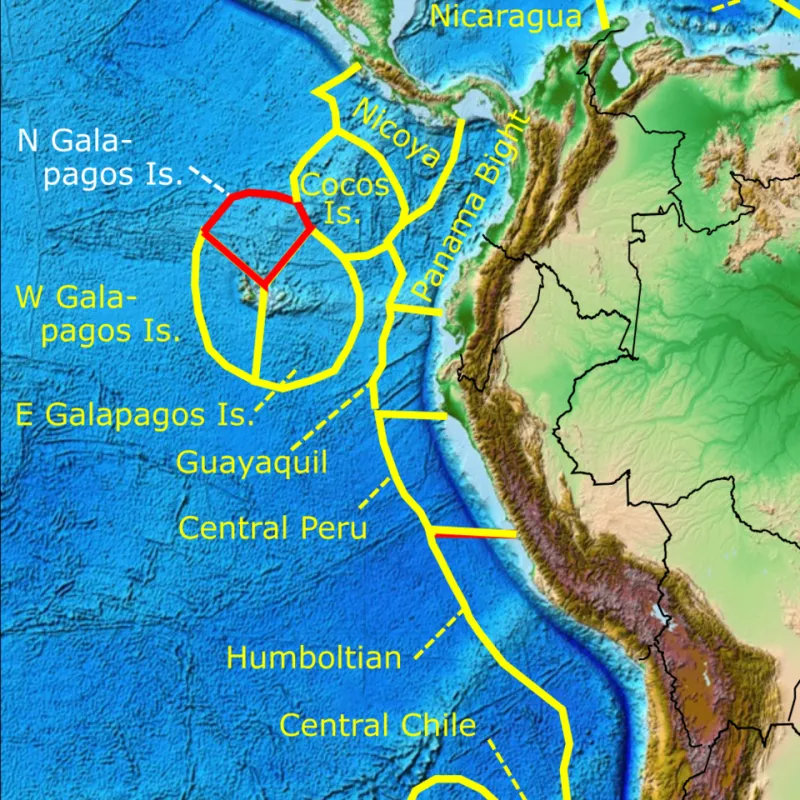
Photo: Every-leaf-that-trembles, CC BY-SA 4.0, via Wikimedia Commons
For most Americans, the Galápagos Islands occupy a specific place in the imagination — a remote archipelago where Darwin famously observed finches, where giant tortoises roam undisturbed, and where the natural world appears to operate on its own ancient schedule. What fewer people realize is that this iconic destination is also becoming one of Latin America's most active employment hubs for environmental professionals. Conservation initiatives, eco-tourism expansion, and Ecuador's growing international partnerships are collectively opening doors that simply did not exist a decade ago.
If you hold a background in environmental science, marine biology, sustainability consulting, or ecological education — and you have been searching for work that carries genuine global significance — Ecuador's conservation sector deserves your full attention.
Why Ecuador, and Why Now
Ecuador is one of the most biodiverse nations on Earth relative to its size. It contains four distinct natural regions — the Coast, the Andes, the Amazon Basin, and the Galápagos — each hosting ecosystems that scientists and conservationists consider irreplaceable. The Galápagos Marine Reserve, which spans approximately 133,000 square kilometers, is the largest marine protected area in the Eastern Pacific. Managing it requires sustained human expertise at every level, from field researchers to policy analysts.
In recent years, the Ecuadorian government has intensified its commitment to conservation through partnerships with international organizations including the Charles Darwin Foundation, the World Wildlife Fund, and the United Nations Environment Programme. These alliances have created a demand for bilingual, internationally trained professionals who can bridge local knowledge with global standards. American candidates — particularly those with graduate degrees and field experience — are consistently sought after to fill these roles.
The eco-tourism sector has amplified this demand further. As visitor numbers to the Galápagos have grown steadily, operators and government agencies alike have recognized that sustainable tourism requires dedicated environmental oversight. The result is a category of hybrid roles that combines conservation science with tourism management — positions that simply did not exist in meaningful numbers before.
What Roles Are Actually Available
The range of positions available to American professionals in Ecuador's conservation sector is broader than many candidates expect. Common placements include:
Marine Biologists and Reef Ecologists — Research institutions and government agencies actively recruit specialists to monitor coral health, track endangered species populations, and contribute to long-term ecological studies. These positions frequently offer multi-year contracts.
Environmental Impact Consultants — As infrastructure projects and tourism developments expand near protected zones, qualified consultants are needed to assess ecological risk and ensure regulatory compliance. American professionals with experience navigating EPA frameworks often find their skill sets translate well to Ecuador's evolving environmental legislation.
Sustainability Educators and Naturalist Guides — Eco-tourism operators in the Galápagos are required by Ecuadorian law to employ certified naturalist guides for all visitor excursions. Organizations regularly seek bilingual educators who can communicate conservation principles to international tourist groups, particularly English-speaking visitors from the United States, Canada, and the United Kingdom.
Wildlife Rehabilitation Specialists — Organizations focused on sea lion populations, giant tortoise breeding programs, and endemic bird species maintain year-round staffing needs for hands-on wildlife care professionals.
Climate Resilience Analysts — A newer category of roles tied to Ecuador's national adaptation strategy, these positions involve modeling climate impact scenarios and advising both public agencies and private operators on long-term resilience planning.
Salary Expectations and Compensation Structure
Compensation in Ecuador's conservation sector varies depending on the funding source — whether a position is tied to a government agency, an international NGO, or a private eco-tourism operator. American professionals should approach salary expectations with nuance.
NGO-funded positions often offer salaries in the range of $1,800 to $3,500 USD per month, supplemented by housing allowances, field equipment, and in some cases, research publication support. Private eco-tourism companies, particularly those operating premium expedition vessels in the Galápagos, tend to offer more competitive packages, with senior naturalist guides and sustainability directors earning between $3,000 and $5,500 USD monthly — a figure that stretches considerably further given Ecuador's lower cost of living relative to most U.S. metropolitan areas.
It is worth noting that Ecuador uses the U.S. dollar as its official currency, which eliminates currency exchange risk and simplifies financial planning for American professionals working abroad.
Navigating the Visa Pathway
One of the most practical questions American professionals ask when considering employment in Ecuador concerns legal authorization to work. Ecuador offers several visa categories relevant to this audience.
The Professional Visa (Visa de Trabajo) is the standard pathway for those with confirmed employment offers. It requires documentation of academic credentials, a valid employment contract, and a background check. Processing times typically range from four to eight weeks when applications are filed through Ecuador's Ministry of Foreign Affairs.
For those who wish to explore opportunities before committing to a formal position, Ecuador's Special Residence Visa allows extended stays of up to two years and can be obtained by demonstrating sufficient financial means. This option is popular among professionals who intend to consult independently or who are in the process of finalizing employment arrangements.
The Galápagos Islands carry an additional layer of immigration complexity. Due to strict residency controls designed to protect the archipelago's ecosystem, working on the islands typically requires a separate provincial work authorization in addition to the national visa. Employers operating in the region are generally familiar with this process and can provide guidance during the onboarding period.
The Career Pivot Argument
Beyond those actively seeking conservation-specific roles, Ecuador's environmental sector has proven to be an effective pivot point for American professionals transitioning from adjacent fields. Former oil and gas engineers have found pathways into environmental remediation consulting. Public school science teachers have transitioned into naturalist education roles. Urban planners with sustainability specializations have moved into coastal zone management positions.
The common thread among successful career changers is a willingness to pursue supplementary certification — particularly Ecuador's national naturalist guide certification, which can be completed through accredited programs in Quito and Santa Cruz — combined with demonstrated field experience, even if that experience was acquired through volunteer programs prior to formal employment.
Making a Tangible Impact
For many American professionals, the appeal of working in Ecuador's conservation sector is not purely financial or logistical. It is the knowledge that the work carries measurable consequence. Species recovery programs in the Galápagos have produced documented success stories — Española Island's waved albatross population has rebounded significantly due to sustained conservation intervention, and the Galápagos giant tortoise, once critically endangered, now numbers over 19,000 individuals across the archipelago.
Contributing to outcomes of this magnitude — and doing so while living and working in one of the most visually stunning environments on the planet — represents a professional proposition that few other regions in the world can match.
Ecuador is not simply a destination. For environmental professionals willing to pursue it with intention, it is a career-defining opportunity.
Feria Laboral Turismo EC connects American professionals with employment and travel opportunities across Ecuador. Explore current conservation sector listings and visa resources at ferialaboralturismoec.com.