Certified, Deployed, and Earning: How American Outdoor Professionals Are Capitalizing on Ecuador's Adventure Tourism Surge
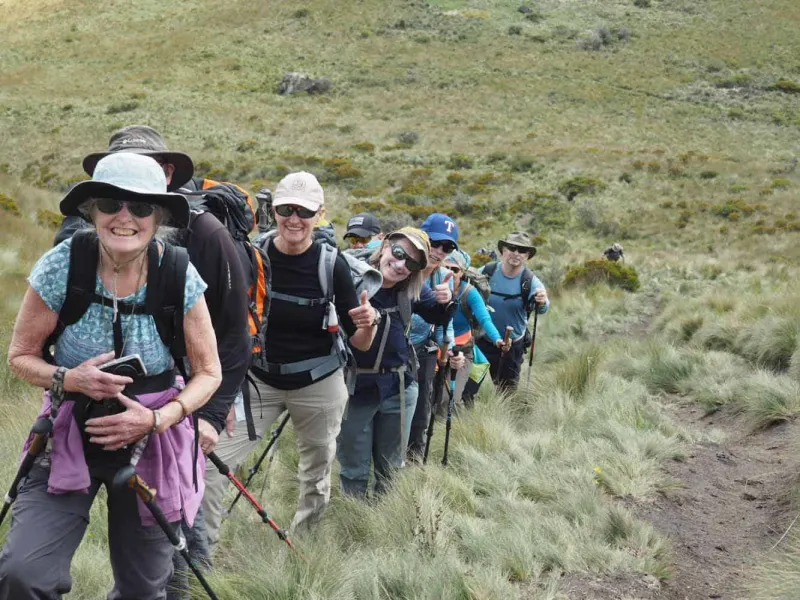
Photo: adventure guide leading hiking group on Andean volcano Ecuador, via embarkexplorationco.com
For a certain type of American professional — the kind who counts elevation gain on weekends and keeps a dry bag in the trunk year-round — Ecuador has quietly become one of the most compelling career destinations on the planet. The country's geography is almost absurdly varied: active volcanoes, cloud forests, whitewater rivers, Amazonian jungle, and Pacific coastline all exist within a few hours of each other. That concentration of terrain, combined with a tourism industry that grew by double digits in the years following the pandemic, has created a structural shortage of qualified adventure guides that international professionals are now moving to fill.
But this is not a story about simply showing up with enthusiasm and a love of the outdoors. Ecuador's adventure tourism operators — increasingly sophisticated, increasingly export-oriented in their marketing, and increasingly accountable to international safety standards — are looking for credentials. The right credentials, obtained through the right pathways, can mean the difference between landing a premium guiding contract and spending six months volunteering at a hostel waiting for a break.
Why Ecuador's Adventure Market Is Different From Anything in the US
American outdoor professionals accustomed to working within the framework of domestic certifying bodies — the American Mountain Guides Association (AMGA), the American Canoe Association (ACA), or Wilderness Medical Associates — often arrive in Ecuador assuming their credentials will translate cleanly. The reality is more nuanced.
Ecuador's Ministry of Tourism has developed its own national guide licensing framework, and while it recognizes several international certifications, it does not automatically confer equivalency. More importantly, the operators who pay the best — typically those running high-end expeditions for North American and European clients — have their own standards that often exceed national minimums. These operators are looking for guides who can communicate fluidly in English, hold internationally recognized technical certifications, and carry documented wilderness medicine training at the Wilderness First Responder (WFR) level or above.
The adventure tourism market in Ecuador is also segmented in ways that reward specialization. A generalist outdoor enthusiast will find fewer high-paying opportunities than a professional who has concentrated their certification portfolio around a specific discipline.
Certification Pathways That Open the Right Doors
Mountain and Trekking Guides
For those drawn to Ecuador's Andean corridor — which includes Cotopaxi, Chimborazo, and the Avenue of the Volcanoes — the International Federation of Mountain Guides Associations (IFMGA) certification represents the gold standard. IFMGA-certified guides are recognized across member nations, and Ecuadorian operators running glacier routes and technical ascents actively recruit for this credential. The pathway is demanding: candidates typically progress through AMGA's Rock, Alpine, and Ski discipline modules before sitting for IFMGA certification, a process that takes several years and considerable investment. However, IFMGA-certified guides working in Ecuador's high-altitude sector routinely command day rates between $150 and $250 USD for private expeditions, with lead guides on multi-day Cotopaxi circuits earning $2,000 to $3,500 per month during peak season.
Whitewater and Kayaking Specialists
Ecuador's river systems — particularly the Toachi, Blanco, and the Napo tributaries in the Amazon basin — have attracted an international whitewater community for decades. The British Canoe Union (BCU), now rebranded as British Canoeing, issues certifications that are widely recognized by Ecuador's premium rafting and kayaking operators. The BCU Level 4 and Level 5 coaching awards, along with ACA Swiftwater Rescue certifications, are frequently listed in job postings from operators in the Tena and Baños regions. Salary ranges for certified whitewater guides vary considerably by operator scale, but experienced professionals with strong English skills and BCU credentials can expect monthly earnings between $1,200 and $2,200 USD, often with accommodation and meals included.
Canopy, Zip-Line, and Aerial Adventure
Ecuador's cloud forest zones — particularly Mindo, Mashpi, and the foothills surrounding Baños — have developed a robust aerial adventure infrastructure. The Association for Challenge Course Technology (ACCT) certification is the benchmark credential for professionals seeking employment in this segment. ACCT-certified practitioners are qualified to both facilitate and inspect challenge course and zip-line operations, which makes them valuable not only as guides but as safety auditors — a role that commands a premium. Operators running luxury eco-lodge aerial experiences have been known to offer ACCT-certified Americans base salaries in the $1,500 to $2,800 USD range monthly, depending on their role scope.
Wildlife and Jungle Guiding
The Amazon basin and the Galápagos represent Ecuador's most internationally recognized wildlife corridors, and both require specialized naturalist credentials. The Galápagos National Park issues its own licensed naturalist guide certification, which is a prerequisite for working within the protected area — and which cannot be substituted by any foreign credential. However, Americans who obtain this certification after completing the required training program gain access to one of the most exclusive guiding markets in the world. Outside the Galápagos, jungle guiding in the Oriente region rewards professionals who combine wilderness medicine training with documented naturalist education. Organizations such as the Wilderness Medical Society and the Tropical Biology Association offer relevant coursework.
The Compensation Reality: What the Numbers Actually Look Like
One of the most persistent misconceptions among American professionals considering Ecuador is that compensation will be significantly lower than US equivalents. For entry-level or uncredentialed positions, that assumption holds. But for internationally certified professionals with English fluency and documented experience, the calculus shifts considerably.
Ecuador's cost of living — particularly outside of Quito's more expensive neighborhoods — means that a monthly salary of $2,000 USD affords a standard of living that would require $5,000 or more in cities like Denver or Seattle. Many guiding contracts include room and board, further compressing expenses. Professionals who negotiate properly, particularly those with IFMGA or ACCT credentials, frequently report saving at a higher rate than they did in equivalent US outdoor industry positions.
Seasonal variation is real and must be planned for. Ecuador's highland dry season (June through September) and the coastal high season (December through April) generate peak demand, while shoulder months require either diversification across disciplines or advance financial planning.
Practical Steps for Professionals Ready to Make the Move
For Americans seriously evaluating this career path, the sequence matters. Obtaining WFR certification before departing is non-negotiable for most reputable operators. Researching Ecuador's Ministry of Tourism guide licensing requirements — which can be completed through official consular channels or directly via the ministry's online portal — should happen in parallel with credential acquisition. Connecting with established operators in target regions before arrival, rather than cold-approaching upon landing, dramatically increases placement success rates.
Language investment is also critical. While English fluency is a professional asset, operators expect guides to communicate at a functional level in Spanish with local logistics teams, park authorities, and community partners. Intermediate Spanish proficiency, at minimum, should be a pre-departure goal.
Ecuador's adventure tourism sector is not a casual opportunity. It rewards preparation, specialization, and professional seriousness. For American outdoor professionals willing to make that investment, however, the returns — financial, experiential, and vocational — are difficult to match anywhere else in the hemisphere.