From Farm to Fork to Flagship: How American Culinary Professionals Are Carving Out Careers in Ecuador's Food Tourism Revolution
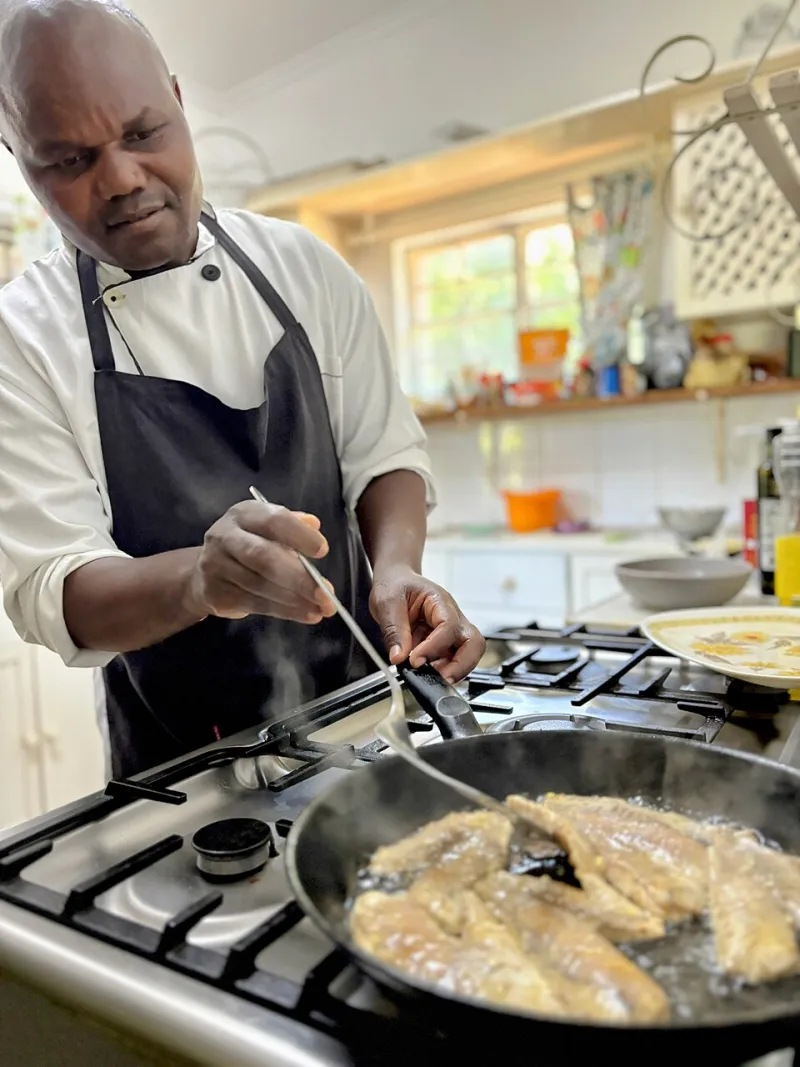
Photo: AmyAbroad, CC BY-SA 4.0, via Wikimedia Commons
Ecuador rarely appears at the top of culinary destination lists the way Peru or Mexico might. Yet among food professionals who have spent time south of the equator, there is a growing consensus: this small Andean nation is quietly becoming one of Latin America's most compelling gastronomic frontiers. For American chefs, restaurateurs, and food tourism entrepreneurs, that underrecognition is less a deterrent than an opportunity.
The country produces roughly 70 percent of the world's supply of fine-aroma cacao. Its altitude-diverse geography yields ingredients that shift dramatically from coast to highlands to Amazon basin — all within a few hours of driving. And its food tourism sector, still maturing relative to neighbors like Colombia and Chile, is actively looking for the kind of international expertise that can help it compete on the global stage.
This is not a story about Americans arriving to teach Ecuadorians how to cook. It is, more accurately, a story about professionals who recognized a market gap, respected what was already there, and built something new from within it.
Why Ecuador's Culinary Landscape Rewards Outside Expertise
The farm-to-table philosophy that has become a marketing staple in American restaurants is, in Ecuador, simply a logistical reality. Supply chains are short. Farmers' markets are embedded in daily life. Ingredients like naranjilla, tree tomato, guanábana, and dozens of varieties of native potato are not specialty imports — they are standard inventory.
For chefs trained in competitive American markets, this abundance represents both a creative challenge and a professional reset. The pressure to source premium ingredients at scale, which defines much of restaurant management in cities like New York or San Francisco, largely disappears. What replaces it is the challenge of translation: helping international visitors understand and appreciate flavors that have no direct equivalent in Western culinary tradition.
That interpretive role is where American culinary professionals are finding their niche. Cooking schools, guided market tours, farm stays with hands-on preparation experiences, and curated multi-course dinners tied to specific regions or agricultural communities are all formats that have proven commercially viable in Ecuador's growing tourism economy.
The Practical Path: Permits, Structures, and Realistic Timelines
Entering Ecuador's food and hospitality sector as a working professional requires navigating a licensing environment that is more accessible than many Americans expect, though not without its procedural requirements.
For those intending to work as employees within an existing restaurant or hospitality operation, the relevant document is a work visa — most commonly the Temporary Residency Visa for Employment (Visa de Trabajo). This requires a valid job offer from an Ecuadorian employer, proof of professional qualifications, and standard documentation such as background checks and a notarized contract. Processing timelines vary but generally fall between four and eight weeks when documentation is complete.
Entrepreneurs pursuing independent ventures have a different route. Establishing a legal business entity in Ecuador — most commonly through a Sociedad Anónima or a Compañía de Responsabilidad Limitada — allows foreign nationals to operate commercially. The process involves registration with the Superintendencia de Compañías, municipal business licensing, and compliance with the Ministerio de Turismo's regulations for any enterprise offering formal tourism services.
Food safety certification through the Agencia Nacional de Regulación, Control y Vigilancia Sanitaria (ARCSA) is mandatory for any operation preparing or selling food commercially. This is a non-negotiable step that American operators frequently underestimate in their planning timelines.
Many culinary entrepreneurs find it practical to partner with a local Ecuadorian co-founder or business consultant during the establishment phase. Beyond the legal efficiencies this arrangement can offer, it brings cultural intelligence that is genuinely difficult to replicate through research alone.
Agritourism: The Format That Is Gaining the Most Traction
Among the various food tourism models that American professionals have pursued in Ecuador, agritourism experiences connected to working farms have demonstrated particularly strong demand. Cacao and coffee operations in provinces like Manabí, Los Ríos, and Pichincha have become natural anchors for these offerings.
The format typically combines an agricultural demonstration — harvesting, fermentation, processing — with a culinary component in which visitors prepare and consume dishes or beverages derived from what they have just witnessed. For visitors from the United States, Canada, and Europe, this closed-loop experience carries significant appeal. It satisfies both the demand for authenticity and the desire for participatory tourism that has come to define premium travel expectations.
American entrepreneurs who have entered this space describe a consistent early challenge: establishing trust with farming communities whose land and knowledge form the foundation of the experience. Those who have succeeded emphasize long-term relationship building, equitable revenue-sharing arrangements, and genuine respect for the intellectual and cultural property embedded in traditional agricultural practices.
The financial model, when structured carefully, can be compelling. Premium agritourism experiences in Ecuador command between $80 and $200 per person among international visitors, with group sizes that keep operational costs manageable. Margins are not guaranteed, but the capital requirements for entry are substantially lower than they would be for comparable ventures in the United States.
Building a Brand That Travels
One of the more instructive patterns among American culinary entrepreneurs in Ecuador is how they approach marketing. The most successful operations do not rely solely on in-country visibility. They cultivate relationships with travel agencies, food and travel media, and tour operators based in the United States before they open their doors.
A cooking school or farm experience in the Andes can generate bookings from American travelers well in advance of a visit if it is positioned correctly in the right distribution channels. Platforms that connect international travelers with local food experiences, combined with a coherent social media presence and credible press coverage, form the backbone of a viable acquisition strategy.
Chefs who have maintained professional networks in the American culinary industry — whether through former restaurant colleagues, culinary school alumni communities, or food media contacts — often find those relationships invaluable when building early momentum for an Ecuador-based venture.
A Market That Rewards Patience and Preparation
Ecuador's gastronomic sector is not a shortcut. It will not immediately reward professionals who arrive expecting to replicate American business models in a new geography. What it does offer, for those who approach it with appropriate preparation and genuine curiosity, is a market where culinary creativity, entrepreneurial initiative, and cultural engagement can converge in ways that are increasingly rare in saturated Western markets.
For American food professionals considering the move — whether as employees, independent chefs, or business founders — Ecuador represents a genuine frontier. The infrastructure is developing. The ingredient base is extraordinary. And the appetite, both from international visitors and from a local food culture gaining confidence in its own identity, is real.
The question is not whether the opportunity exists. It is whether the right professionals are paying close enough attention to recognize it.