The Price of Paradise: How Ecuador's Tourism Surge Is Testing the Affordability That Drew Americans Here in the First Place
When the Dream Destination Starts Raising Its Prices
For years, Ecuador occupied a near-mythical position in the imagination of American professionals looking to work abroad: a dollarized economy that eliminated currency risk, a cost of living that stretched paychecks further than most U.S. cities, and a tourism sector hungry for English-speaking talent. That combination proved irresistible — and therein lies the problem.
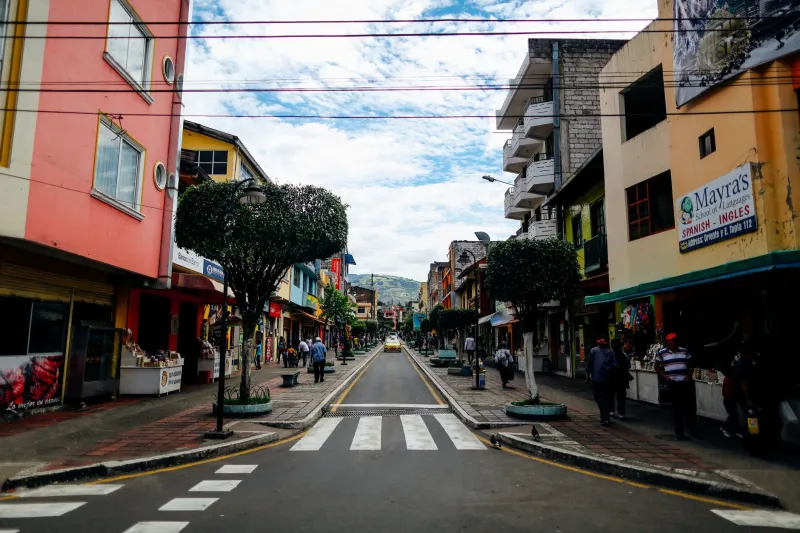
The same qualities that attracted American workers have accelerated their arrival in numbers that certain markets were never designed to absorb. In cities like Cuenca, once celebrated in international retirement publications as one of the world's most affordable destinations, monthly rents in desirable neighborhoods have climbed sharply over the past five years. Landlords who once charged $350 for a furnished two-bedroom apartment in the El Centro district now routinely list comparable units at $600 to $850 — still modest by Manhattan standards, but a significant departure from the figures that first populated the spreadsheets of relocating Americans.
This is not an isolated phenomenon. It is a pattern repeating itself across Ecuador's most tourism-saturated corridors, and American workers arriving with outdated cost projections are among those feeling it most acutely.
Understanding the Mechanics of the Shift
What is driving these changes? The answer is layered. Ecuador's broader tourism boom has increased foot traffic and investor interest in scenic towns and coastal communities simultaneously. International capital has followed, funding boutique hotels, co-working spaces, and upscale restaurants that cater to foreign tastes. While this development benefits the tourism sector as an employer, it also signals to local property owners that the market can bear higher prices.
The dollarized economy, paradoxically, accelerates this dynamic. Because Ecuador uses the U.S. dollar, American workers do not face the exchange-rate buffer that often moderates foreigner-driven inflation in other expat-heavy destinations. A landlord in Quito or Baños does not need to convert dollars into a local currency — the pricing signals are immediate and direct.
Simultaneously, Ecuador's own middle class is expanding, generating domestic demand for upgraded housing in the same urban cores that appeal to foreign professionals. American workers are not the sole drivers of rising costs, but their concentrated presence in specific neighborhoods has made them visible contributors to a broader affordability squeeze.
The Neighborhoods Where the Numbers Have Changed Most
Cuenca's Gringolandia — a nickname locals apply to the expat-dense neighborhoods near Parque de la Madre — has become something of a cautionary tale. Coffee shops now charge prices comparable to Portland, Oregon. Real estate agencies market properties in English before Spanish. The cultural exchange that initially made the neighborhood charming has, in the view of some longtime residents, tipped into something more transactional.
Similar pressures are visible in Quito's La Floresta and González Suárez corridors, where the concentration of international NGOs, tourism operators, and remote workers has pushed dining and rental costs well above the national average. Along the coast, Montañita's evolution from backpacker haven to boutique surf destination has priced out the budget-conscious workers who staffed its early hospitality operations.
None of these markets have become unaffordable in absolute terms — a comparison to San Francisco or Miami would be laughable. But the gap between expectation and reality is widening, and for American workers whose salaries are denominated in local tourism-sector wages rather than U.S. remote income, the margin matters.
Practical Strategies for Workers Already in Saturated Markets
For Americans already employed in Ecuador's primary tourism destinations, adaptation rather than relocation may be the most pragmatic first response. Several approaches have proven effective.
Negotiating housing before arrival — rather than securing short-term accommodations and searching locally — consistently yields better rates. Landlords who meet prospective tenants through professional referrals or employer networks tend to offer more favorable terms than those listing on international platforms, where algorithmic pricing has begun to mirror short-term rental markets.
Forming housing cooperatives among colleagues is gaining traction in cities like Cuenca and Quito. American workers employed by the same tour operator or hospitality group are increasingly pooling resources to lease larger properties collectively, dividing costs in ways that restore the affordability margins that individual rentals no longer provide.
Shopping and dining outside the expat orbit remains the most straightforward cost-control measure, though it requires deliberate effort. The mercados municipales in every major Ecuadorian city offer produce, prepared food, and household goods at prices largely untouched by tourism-driven inflation. Workers who integrate into these local commercial ecosystems rather than defaulting to expat-oriented establishments report significantly lower monthly expenditures.
The Secondary City Advantage: Where the Calculus Still Works
Perhaps the more consequential opportunity for American workers entering Ecuador's tourism market now lies not in the established hubs, but in the secondary cities and emerging tourism corridors where infrastructure investment is beginning to outpace international attention.
Loja, in Ecuador's southern highlands, has developed a growing cultural tourism sector anchored by its university population and music heritage. Rental costs remain well below Cuenca's current levels, and the city's improving road connections to Peru are attracting a new category of cross-border travel itineraries that require professional hospitality and guiding services.
Tena, in the Amazon foothills, sits at the center of Ecuador's expanding jungle tourism market. Operators running river expeditions and community-based ecotourism programs have found it increasingly difficult to staff English-speaking coordinator roles, creating genuine opportunity for qualified American workers willing to accept a more remote posting. Housing costs in Tena remain modest, and the lifestyle — though demanding — carries a distinct appeal for outdoor-oriented professionals.
Riobamba, positioned as a gateway to Chimborazo and the Nariz del Diablo railway experience, is attracting investment from tour operators seeking alternatives to Baños's increasingly crowded adventure tourism infrastructure. The city's cost of living has not yet registered the increases seen in its more famous neighbors, and its central location on the Pan-American Highway makes regional travel straightforward.
Recalibrating Expectations Without Abandoning the Opportunity
The affordability challenges emerging in Ecuador's tourism-saturated markets do not invalidate the opportunity the country continues to represent for American professionals. They do, however, demand a more sophisticated approach to planning than the broad strokes that characterized earlier waves of migration.
Workers who arrive with current, neighborhood-specific cost data — rather than figures sourced from articles written several years ago — are better positioned to negotiate compensation packages, select housing strategically, and identify the markets where their skills will command the most favorable combination of salary and living costs.
Ecuador's tourism sector is not retreating. The country's investment in infrastructure, its geographic diversity, and its sustained international marketing efforts continue to generate the visitor volume that sustains professional demand. What is changing is the distribution of that opportunity — and the workers who pay attention to that shift, rather than chasing the destinations that were affordable five years ago, are the ones most likely to find the balance that drew them here in the first place.
The price of paradise has risen. But for those willing to look beyond the obvious, it remains well within reach.